

What is Predispersed Rubber Chemicals
Predispersed rubber chemicals are a type of additive used in the production of rubber materials. These chemicals are designed to be easily dispersed within the rubber matrix, allowing for more efficient and consistent processing. Predispersed chemicals come in a variety of forms, including powders, pastes, and liquids, and can include a range of additives such as fillers, plasticizers, vulcanizing agents, and processing aids.
Advantages of Predispersed Rubber Chemicals
Enhanced Dispersion
Predispersed chemicals are designed to disperse uniformly within the rubber matrix, leading to better material properties. This uniform dispersion helps to prevent agglomeration and ensure a more consistent product.
Improved Processing
Predispersed chemicals can simplify the rubber production process by reducing the energy and time required for mixing and dispersing. This can lead to lower manufacturing costs and improved productivity.
Customization
Predispersed chemicals can be tailored to meet the specific needs of various rubber products. Manufacturers can choose from a range of additives and customize the formulation to optimize the performance and properties of the final product.
Environmental Benefits
The use of predispersed chemicals can help to reduce waste and improve the environmental impact of rubber production. By optimizing the use of additives and minimizing waste, manufacturers can contribute to more sustainable practices in the industry.
Safety
Predispersed chemicals can be designed with safety in mind, ensuring that they are easy to handle and pose minimal risks to workers during the production process. This can help to create a safer working environment and reduce the risk of accidents or injuries.
Innovation
The use of predispersed chemicals can enable manufacturers to explore new possibilities and innovate in the development of advanced rubber products. With the ability to customize formulations and fine-tune material properties, manufacturers can create products that meet the evolving needs of the market.
-

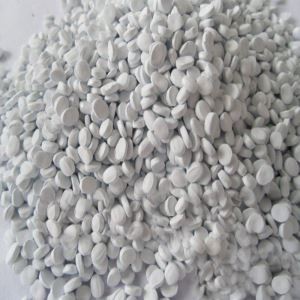
MASTERBACTH TIO2-80
Chemical Name: TiO2-80. Appearance: White granules. Approx: 1.95 g/cm3(20℃). Density: 20℃Package: Add to Inquiry -
Rubber Additives ZDBC-80
Chemical Name: ZDBC-80. Appearance: White to yellowwish granules. Approx: 1.01~1.11 g/cm3(20℃). Add to Inquiry -
rubber accelerator masterbatch CBS/CZ-80
Chemical Name: CBS/CZ-80. Appearance: Grey-white or light-yellow granules. Approx: ~1.19 Add to Inquiry -
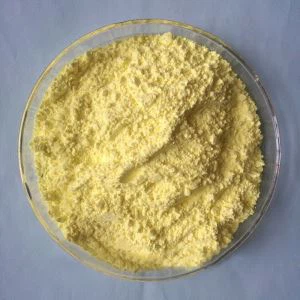
Predispersed Rubber Chemical ZnO-80
Chemical Name: ZnO-80. Appearance: Yellow granules. Approx: ~1.64 g/cm3(20℃). Density: 20℃Package: Add to Inquiry -
Predispersed Rubber Chemicals CaO-80
Chemical Name: CaO-80. Molecular Formula: CaO. Appearance: Grey-white granules. Approx: 2 Add to Inquiry -
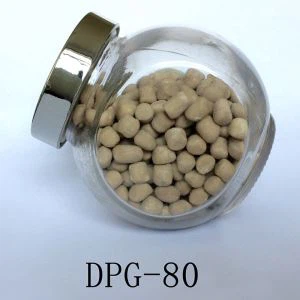
Predispered rubber accelerator DPG-80
Chemical Name: DPG/D-80. Appearance: White or grey-white granules. Approx: ~1.14 g/cm3(20℃). Add to Inquiry -
Pre-dispersed Masterbatch Rubber Accelerator MBTS/DM-80
Chemical Name: MBTS-80. Appearance: White or light-yellow granules. Approx: ~1.36 g/cm3(20℃). Add to Inquiry -
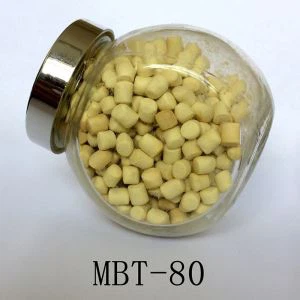
Rubber accelerator chemical MBT/M-80
Chemical Name: MBT/M-80. Appearance: Yellowwish granules. Approx: ~1.33 g/m3(20℃). Package: Net 25 Add to Inquiry -
Pre-dispersed Rubber Accelerator ZDEC-80
Chemical Name: ZDEC-80. Appearance: White to greyish granules. Approx: ~1.33 g/cm3(20℃). Density: Add to Inquiry -
Rubber Accelerator ETU-80
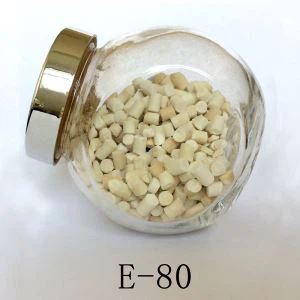
Chemical Name: ZDEC-80. Appearance: Grey-white granules. Approx: ~ 1.13-1.23 g/cm3(20℃). Density: Add to Inquiry




Why Choose Us
High quality products
We always put customer needs and expectations in the first place, refine on, continuous improvement, to seek every opportunity to do better, to provide customers with their expectations of quality products, to provide customers with the most satisfactory service at anytime.
Professional service
We can accept factory inspection and goods inspection at any time. Technical discussion, research and development of new products, and complete after-sales service.
Quality assurance
In terms of quality assurance, the company strictly follows the standards and norms of the industry quality system. Adopt industry-leading testing equipment to ensure product quality and good reputation.
Rich experience
Has a long-standing reputation in the industry, which makes it stand out from its competitors. With over many years of experience, they have developed the skills necessary to meet their clients' needs.
Competitive prices
We offer our products at competitive prices, making them affordable for our customers. We believe that high-quality products should not come at a premium, and we strive to make our products accessible to all.
Professional team
We have a team of skilled and experienced professionals who are well-versed in the latest technology and industry standards. Our team is dedicated to ensuring that our customers get the best service and support possible.
What Is the Chemical Composition of Predispersed Rubber Chemicals
Active Ingredients
The active ingredients of predispersed rubber chemicals are the compounds that provide the desired effect in the final rubber product. These can include accelerators, antioxidants, fillers, plasticizers, and other additives that enhance the properties of the rubber.
Dispersion Agents
To facilitate the uniform dispersion of the active ingredients in the rubber, predispersed rubber chemicals often contain dispersion agents. These agents help to reduce the surface tension between the rubber and the active ingredients, allowing them to be more evenly distributed.
Solvents
In some cases, predispersed rubber chemicals may contain solvents that help to maintain the stability of the dispersion and improve the compatibility between the different components.
Stabilizers
To prevent the premature reaction of certain active ingredients, predispersed rubber chemicals may include stabilizers that control the rate of reaction during the curing process.
Processing Aids
Predispersed rubber chemicals may also contain processing aids that facilitate the efficient mixing and molding of the rubber. These aids can reduce the energy consumption during the manufacturing process and improve the flow characteristics of the rubber mixture.
How Do Predispersed Rubber Chemicals Improve the Performance of Rubber Products
Improved Processing
Predispersed rubber chemicals are designed to be easily mixed with rubber compounds, resulting in improved processing characteristics. This means that the rubber can be more efficiently molded and shaped without causing issues such as streaks, lumps, or inconsistent distribution of the chemicals. The improved processing can lead to faster production times and reduced waste.
Enhanced Physical Properties
The predispersed form of the chemicals ensures that they are uniformly distributed throughout the rubber matrix. This uniformity is critical for achieving consistent physical properties, such as tensile strength, elongation, and tear resistance, across the entire product. It also helps to prevent the formation of weak spots or areas of varying performance within the rubber product.
Faster Vulcanization
Predispersed rubber chemicals can accelerate the vulcanization process, which is the chemical reaction that transforms ordinary rubber into a more durable material. Faster vulcanization times can reduce production cycle times and increase throughput. This can be particularly beneficial for high-volume manufacturing operations.
Reduced Scrap Rates
Uniform dispersion of chemicals reduces the likelihood of processing defects that could lead to scrap material. By ensuring that every part of the rubber compound contains the correct amount of chemicals, predispersed systems minimize the risk of producing off-specification or substandard products that would otherwise need to be discarded.
Cost Efficiency
Although predispersed systems may have a higher initial cost compared to traditional rubber chemicals, the overall cost-effectiveness can be higher due to reduced waste and improved production efficiency. The uniform distribution of the chemicals also helps to maximize the performance of the rubber, which can extend the product's lifespan and reduce maintenance costs over time.
Consistency and Repeatability
Predispersed systems ensure that each batch of rubber compound will have the same chemical composition, which is crucial for maintaining product consistency and repeatability. This is especially important for applications where performance specifications are tightly controlled, such as in the manufacturing of tires, conveyor belts, and automotive parts.
Different Types of Pre Dispersed Rubber Additives
01/
Accelerators
Accelerators are pre-dispersed chemicals that facilitate the vulcanization process, allowing for faster curing times and improved cross-link density in the rubber. They are available in various classes, such as sulfenamides, thioureas, and guanidines, each with its unique performance characteristics and suitability for different types of rubber.
02/
Antioxidants
Antioxidants are pre-dispersed compounds that help prevent the degradation of rubber caused by exposure to heat, light, and oxygen. They can be classified into primary and secondary antioxidants, with the former providing direct protection and the latter scavenging secondary products of oxidation.
03/
Fillers
Fillers are pre-dispersed materials that are added to rubber to enhance its mechanical properties, such as stiffness and wear resistance. Common fillers include carbon black, silica, and clay. They can also be used to adjust the cost and performance balance of the final product.
04/
Plasticizers
Plasticizers are pre-dispersed compounds that increase the flexibility and workability of rubber. They reduce the glass transition temperature of the rubber, making it more pliable and easier to process. Plasticizers can be either internal (part of the polymer backbone) or external (added during compounding).
05/
Processing Aids
Processing aids are pre-dispersed additives that facilitate the mixing and molding of rubber compounds. They can reduce the viscosity of the mixture, allowing for easier and more efficient processing. Processing aids often include lubricants, tackifiers, and release agents.
06/
Stabilizers
Stabilizers are pre-dispersed compounds that protect the rubber from thermal, light, and ozone degradation. They can prevent the breakdown of the polymer chains and extend the service life of the finished product. Examples of stabilizers include heat age resins and light stabilizers.
How Are Predispersed Rubber Chemicals Used In The Manufacturing Process Of Rubber Products
Raw Material Selection
The process begins with the selection of raw materials, including the rubber polymer and the predispersed chemicals. The choice of chemicals depends on the desired properties of the final product, such as tensile strength, elongation, and heat resistance. Predispersed chemicals are chosen for their uniformity and compatibility with the specific rubber type.


Compounding
Compounding is the process where the rubber polymer is blended with the predispersed chemicals, fillers, and other additives. This stage is crucial for ensuring that the predispersed chemicals are uniformly distributed throughout the rubber matrix. The compounding process typically involves intensive mixing to achieve this homogeneous distribution, which is facilitated by the pre-dispersion of the chemicals.
Molding and Shaping
Once the compounding is complete, the rubber mixture is molded and shaped into the desired form using molds, extruders, or calenders. Predispersed chemicals help in reducing the viscosity of the rubber mixture, making it easier to mold and shape without causing defects or inconsistencies. The uniform dispersion of the chemicals also ensures that the final product will exhibit consistent properties across its entire surface and volume.


Vulcanization
Vulcanization is the curing process that transforms the rubber mixture into a more durable and functional material. Predispersed accelerators, which are part of the pre-dispersed chemicals, facilitate this process by catalyzing the cross-linking reactions between the rubber polymer chains. The uniform distribution of the accelerators ensures that the vulcanization takes place evenly throughout the rubber, resulting in a product with improved mechanical properties and long-term durability.
Order Management
Throughout the manufacturing process, quality control measures are implemented to ensure that the rubber products meet the specified performance standards. The use of predispersed chemicals helps in maintaining consistency in the final product by eliminating variations caused by non-uniform distribution of the additives. This uniformity is critical for achieving the desired physical properties and ensuring that the products will perform as expected in various applications.


Cost And Efficiency
The use of predispersed rubber chemicals can also contribute to cost savings and increased efficiency in the manufacturing process. By ensuring uniform dispersion of the chemicals, predispersed systems reduce the likelihood of processing defects that could lead to scrap material. The improved processing efficiency can also lead to faster production times and reduced waste, resulting in lower overall production costs.
Can Predispersed Rubber Chemicals Be Used in Combination with Other Additives
Predispersed rubber chemicals can be used in combination with other additives to achieve specific properties in the final rubber product. The combination of additives is carefully selected based on the desired performance characteristics, such as increased strength, enhanced durability, improved elasticity, or specific environmental resistance.
A rubber compound may require a combination of predispersed accelerators, antiozonants, and plasticizers to achieve the desired balance of stiffness, pliability, and resistance to environmental factors. The predispersed nature of these additives ensures that they are evenly distributed within the rubber matrix, allowing for optimal interaction and synergistic effects between different additives.
The use of predispersed additives in combination also helps to minimize the potential for processing issues, such as uneven distribution or clustering of non-predispersed additives, which could lead to variability in the properties of the final product. By using predispersed chemicals, manufacturers can ensure that the desired combination of additives is uniformly incorporated into the rubber, resulting in a more consistent and predictable performance of the finished product across a range of applications.
Can Predispersed Rubber Chemicals Be Used in the Production of Innovative and Futuristic Rubber Products
Predispersed rubber chemicals can indeed be used in the production of innovative and futuristic rubber products. As technology advances and new materials are developed, the need for specialized additives that can deliver unique performance becomes increasingly important.
Predispersed rubber chemicals provide a platform for innovation by enabling precise tailoring of the properties of rubber compounds. For instance, in the development of smart materials, predispersed conductive agents might be used to impart electrical conductivity to the rubber, allowing for the creation of intelligent sensors or interactive surfaces. Similarly, predispersed additives can be utilized to produce high-performance rubbers for advanced applications like aerospace, automotive, and biomedical devices, where stringent requirements for thermal stability, chemical resistance, and mechanical behavior must be met.
The use of predispersed additives can facilitate the creation of environmentally friendly rubber products. For example, predispersed bio-based materials or renewable additives can be integrated into the rubber matrix to produce compounds with lower carbon footprints and improved sustainability.
The versatility of predispersed rubber chemicals allows them to be incorporated into the production of a wide range of innovative and futuristic rubber products. Their ability to deliver precise and consistent properties makes them an invaluable tool for manufacturers aiming to push the boundaries of rubber technology.
Can Predispersed Rubber Chemicals Be Used in the Production of Biodegradable and Compostable Rubber Products
Predispersed rubber chemicals can be used in the production of biodegradable and compostable rubber products. As there is a growing interest in developing sustainable materials, the use of biodegradable additives and polymers is becoming increasingly relevant.
In the context of biodegradable and compostable rubber products, predispersed chemicals that facilitate these properties can be incorporated into the formulation. These might include natural additives like vegetable oils, bio-based polymers, and certain types of biologically derived accelerators that promote the degradation process. By using predispersed versions of these additives, manufacturers can ensure that they are uniformly distributed within the rubber compound, which is crucial for achieving the desired biodegradability and compostability characteristics.
The uniform dispersion provided by predispersed chemicals helps to enhance the performance of biodegradable rubber products, allowing them to degrade more readily in the environment without compromising the initial properties of the rubber. This can be especially important for applications where the product may be exposed to the elements over time, such as in agricultural or horticultural settings.
What Factors Should Be Considered When Selecting Predispersed Rubber Chemicals
The intended application of the rubber compound should guide the selection of predispersed chemicals. Different applications may require different properties, such as enhanced mechanical strength, improved thermal resistance, or increased durability. Therefore, it is essential to choose chemicals that can deliver the desired performance characteristics for the specific application at hand.
The compatibility of the predispersed chemicals with other components in the rubber compound is a crucial consideration. Incompatible materials can lead to poor performance, defects, or even complete failure of the rubber product. Manufacturers should select chemicals that are known to work well with the other ingredients in the formulation, ensuring that the finished product will exhibit the desired properties and behavior.
The cost-effectiveness of the predispersed chemicals should be taken into account. While it is important to select high-quality materials to ensure the performance and reliability of the rubber product, it is also essential to manage costs effectively. Manufacturers should look for chemicals that offer a good balance of performance and cost, avoiding unnecessarily expensive materials while still ensuring that the finished product meets the necessary quality standards.
The availability and consistency of supply of the predispersed chemicals are important considerations. Manufacturers need to ensure that the selected chemicals are readily available from reliable suppliers, ensuring a consistent supply of materials for ongoing production needs. Long lead times or supply chain disruptions can result in production delays and increased costs, so it is essential to choose chemicals that are reliably available.
Regulatory compliance is a non-negotiable factor when selecting predispersed rubber chemicals. Manufacturers must ensure that the selected chemicals comply with all relevant regulations and standards, including those related to environmental, health, and safety concerns. Using non-compliant materials can result in legal penalties, product recalls, and damage to the manufacturer's reputation.
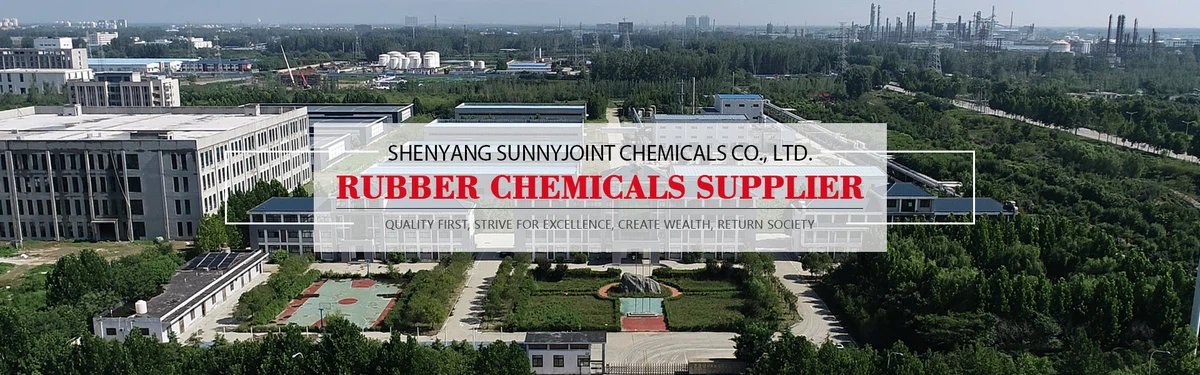
Our Factory
Shenyang Sunnyjoint Chemicals Co., Ltd. is a professional rubber chemicals supplier established in 2003, located in Shenyang, Liaoning province. We devote to rubber chemicals' research, development, production, and sales. The main serials of our products are rubber accelerator, rubber antioxidant, vulcanizing agent, antiscorching agent and so on.
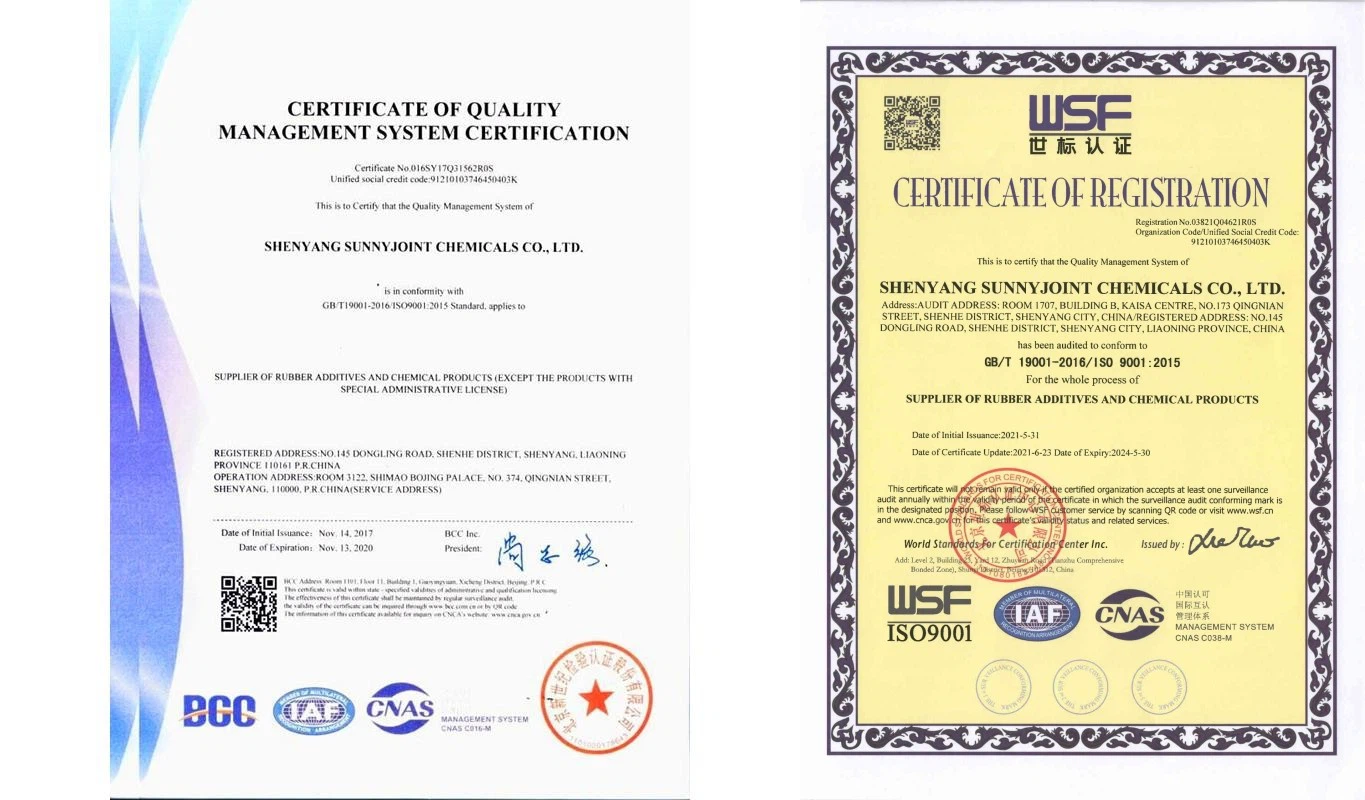
Certifications
FAQ
Q: Can Predispersed Rubber Chemicals be used for synthetic rubber?
A: Yes, Predispersed Rubber Chemicals can be used for synthetic rubber compounds. The selection of the appropriate Predispersed Rubber Chemical should consider the specific properties and requirements of the synthetic rubber being used.
Q: Can Predispersed Rubber Chemicals be used for recycled rubber?
A: Predispersed Rubber Chemicals can be used in the recycling process of rubber. By adding the appropriate Predispersed Rubber Chemical, the recycled rubber can be effectively compounded, ensuring consistent performance.
Q: Can Predispersed Rubber Chemicals improve the physical properties of vulcanized rubber?
A: Predispersed Rubber Chemicals can improve the physical properties of vulcanized rubber, such as tensile strength, elongation, hardness, and aging resistance. The pre-dispersion ensures better interaction and distribution of the active ingredient, leading to enhanced performance.
Q: Can Predispersed Rubber Chemicals reduce the risk of human error in rubber compounding?
A: Yes, Predispersed Rubber Chemicals can reduce the risk of human error in rubber compounding. The pre-dispersion eliminates the need for weighing and handling individual chemicals, reducing the chances of incorrect dosing or incomplete dispersion.
Q: Can Predispersed Rubber Chemicals be customized for specific applications?
A: Yes, Predispersed Rubber Chemicals can be customized for specific applications. The active ingredient, polymer carrier, and concentration can be tailored to meet the specific requirements and performance targets of the application.
Q: How can the effectiveness of Predispersed Rubber Chemicals be tested?
A: The effectiveness of Predispersed Rubber Chemicals can be tested through various methods, including rheological analysis, cure rate determination, physical property testing, and analysis of final product performance.
Q: Can Predispersed Rubber Chemicals be used in non-rubber materials?
A: While Predispersed Rubber Chemicals are primarily used for rubber, they can also be used in other materials such as plastics and coatings to provide specific performance enhancements.
Q: How are Predispersed Rubber Chemicals different from conventional rubber chemicals?
A: Predispersed Rubber Chemicals offer several advantages over conventional rubber chemicals. They are pre-dispersed, which ensures better dispersion and uniform distribution in rubber compounds, leading to improved performance and reduced batch-to-batch variation.
Q: What are the common types of Predispersed Rubber Chemicals?
A: Common types of Predispersed Rubber Chemicals include accelerators, antioxidants, blowing agents, vulcanizing agents, and processing aids. Each type serves a specific purpose in rubber compounding.
Q: How are Predispersed Rubber Chemicals manufactured?
A: Predispersed Rubber Chemicals are manufactured by blending the active ingredient with a polymer carrier, such as EPDM or NBR, using specialized equipment like internal mixers or extruders. The mixture is then cooled, granulated, and packaged.
Q: What are the advantages of using Predispersed Rubber Chemicals?
A: The advantages of using Predispersed Rubber Chemicals include improved dispersion, reduced mixing time, enhanced processing safety, better batch-to-batch consistency, increased productivity, and improved final product performance.
Q: How do Predispersed Rubber Chemicals improve dispersion?
A: Predispersed Rubber Chemicals are already pre-dispersed in a polymer carrier, which ensures better dispersion in rubber compounds. This leads to improved interaction between the chemical and the rubber matrix, resulting in enhanced performance.
Q: Can Predispersed Rubber Chemicals be used in all types of rubber?
A: Predispersed Rubber Chemicals can be used in various types of rubber, including natural rubber (NR), styrene-butadiene rubber (SBR), butadiene rubber (BR), nitrile rubber (NBR), and ethylene propylene diene monomer (EPDM), among others.
Q: How are Predispersed Rubber Chemicals incorporated into rubber compounds?
A: Predispersed Rubber Chemicals are added during the mixing process of rubber compounds, similar to conventional rubber chemicals. They are easily dispersed and uniformly distributed throughout the rubber matrix.
Q: Can Predispersed Rubber Chemicals be used in combination with other additives?
A: Yes, Predispersed Rubber Chemicals can be used in combination with other additives such as fillers, plasticizers, and processing aids. The compatibility and effectiveness of the combination should be considered.
Q: What factors should be considered when selecting Predispersed Rubber Chemicals?
A: When selecting Predispersed Rubber Chemicals, factors such as the type of rubber, processing conditions, desired performance properties, and compatibility with other additives should be taken into account.
Q: Can Predispersed Rubber Chemicals be harmful to health?
A: Predispersed Rubber Chemicals can have varying degrees of toxicity depending on the specific chemical used. It is important to follow safety guidelines and use appropriate protective equipment when handling these substances.
Q: Are there any environmentally friendly Predispersed Rubber Chemicals?
A: Yes, there are environmentally friendly Predispersed Rubber Chemicals available. These include formulations that are free from harmful substances like heavy metals or volatile organic compounds (VOCs).
Q: Can Predispersed Rubber Chemicals improve the cure rate of rubber compounds?
A: Yes, Predispersed Rubber Chemicals can improve the cure rate of rubber compounds. The pre-dispersion of the active ingredient ensures better interaction with the rubber matrix, leading to faster and more efficient vulcanization.
Q: Can Predispersed Rubber Chemicals be used for high-temperature applications?
A: Predispersed Rubber Chemicals can be used for high-temperature applications, provided that the active ingredient is suitable for such conditions. It is important to select the appropriate Predispersed Rubber Chemical based on the specific requirements of the application.
As a professional China predispersed rubber chemicals manufacturer and suppliers, we supply rubber chemical, rubber additive and prepared rubber products with high quality and best price. Feel free to buy our quality predispersed rubber chemicals.
