

What is Vulcanizing Agent
Vulcanizing agent is a chemical substance used to accelerate the vulcanization process of rubber materials, thereby improving the performance and service life of rubber products. In the rubber industry, vulcanizing agents are very important additives. They can form a cross-linked structure between rubber molecules, thereby improving the mechanical properties, heat resistance, oil resistance, chemical corrosion resistance, etc. of the rubber. There are many types of vulcanizing agents, which can be divided into two categories: inorganic vulcanizing agents and organic vulcanizing agents according to their chemical composition. Inorganic vulcanizing agents are mainly sulfur, while organic vulcanizing agents include mercaptans, thiophenols, amines and other compounds. These compounds can react with rubber under heat or pressure to form stable cross-links between rubber molecules.
Advantages of Vulcanizing Agent
Enhanced Physical Properties
Vulcanizing agents help to enhance the physical properties of rubber. During vulcanization, the vulcanizing agent promotes the formation of cross-links between the polymer chains in the rubber. These cross-links create a three-dimensional network that gives the rubber increased tensile strength, elasticity, and resistance to swelling by oils and gasoline. As a result, vulcanized rubber products are stronger, more durable, and longer-lasting than their non-vulcanized counterparts.
Improved Processing
Vulcanizing agents can also improve the processing characteristics of rubber. They can help to reduce the viscosity of the rubber mixture, making it easier to mix and mold. This can result in more efficient production processes, faster cycle times, and reduced production costs.
Customizable Properties
Vulcanizing agents can be tailored to achieve specific properties in the final rubber product. Different types of vulcanizing agents can be used to adjust the level of cross-linking and the resulting properties of the vulcanized rubber. This allows manufacturers to create customized rubber products with unique characteristics that meet the specific needs of their applications.
Wide Range of Applications
Vulcanizing agents are used in a wide range of applications, including tires, hoses, seals, gaskets, and other rubber products. The enhanced properties of vulcanized rubber make it suitable for applications where durability, elasticity, and resistance to chemicals are important.
Compatibility with Other Additives
Vulcanizing agents can be used in combination with other additives to achieve additional properties in the vulcanized rubber. For example, they can be used along with fillers, plasticizers, and antioxidants to modify the performance characteristics of the rubber and enhance its overall quality.
Cost-Effective Solution
Vulcanizing agents are generally cost-effective solutions for improving the properties of rubber. The cost of vulcanizing agents is typically lower than that of alternative methods for improving the properties of rubber. Furthermore, the enhanced durability and longevity of vulcanized rubber products can offset any additional costs associated with the use of vulcanizing agents.
-

DTDC POWDER
Chemical Name:Dithiocaprolactame. Molecular Formula: C12H20N2O2S2. Molecular Weight: 390.41. CAS Add to Inquiry -
DTDC Powder
Chemical Name:Dithiocaprolactame. Molecular Formula: C12H20N2O2S2. Molecular Weight: 390.41. CAS Add to Inquiry -
Dtdm Powder
Chemical Name:. 4,4’-dithiodimorpholine. Molecular Formula: C8H16N2O2S2. Molecular Weight: Add to Inquiry -
Rubber Accelerator Hexamethylenetetramine(HMT)
Chemical Name:. Methenamine. Molecular Formula: (CH2)6N4. Molecular Weight: 140.19. Gravity: Add to Inquiry -
Vulcanizing Agent CLD POWDER
Chemical Name:Dithiocaprolactame. Molecular Formula: C12H20N2O2S2. Molecular Weight: 390.41. CAS Add to Inquiry -
Vulcanizing Agent CLD
Chemical Name:Dithiocaprolactame. Molecular Formula: C12H20N2O2S2. Molecular Weight: 390.41. CAS Add to Inquiry -
Dtdm Accelerator
Chemical Name:. 4,4’-dithiodimorpholine. Molecular Formula: C8H16N2O2S2. Molecular Weight: Add to Inquiry -
DTDM 103-34-4
Chemical Name:. 4,4’-dithiodimorpholine. Molecular Formula: C8H16N2O2S2. Molecular Weight: Add to Inquiry -
Rubber Vulcanizing Agent CLD
Chemical Name:Dithiocaprolactame. Molecular Formula: C12H20N2O2S2. Molecular Weight: 390.41. CAS Add to Inquiry -
4,4’-dithiodimorpholine DTDM
Chemical Name:. 4,4’-dithiodimorpholine. Molecular Formula: C8H16N2O2S2. Molecular Weight: Add to Inquiry -
Rubber Vulcanizing Agent DTDC
Chemical Name:Dithiocaprolactame. Molecular Formula: C12H20N2O2S2. Molecular Weight: 390.41. CAS Add to Inquiry -
Vulcanizing Agent HTS 5719-73-3
Chemical Name:. Sodium hexamethylene-1,6-bisthiosulfate dihydrate. Molecular Formula: Add to Inquiry


Why Choose Us
High quality products
We always put customer needs and expectations in the first place, refine on, continuous improvement, to seek every opportunity to do better, to provide customers with their expectations of quality products, to provide customers with the most satisfactory service at anytime.
Professional service
We can accept factory inspection and goods inspection at any time. Technical discussion, research and development of new products, and complete after-sales service.
Quality assurance
In terms of quality assurance, the company strictly follows the standards and norms of the industry quality system. Adopt industry-leading testing equipment to ensure product quality and good reputation.
Rich experience
Has a long-standing reputation in the industry, which makes it stand out from its competitors. With over many years of experience, they have developed the skills necessary to meet their clients' needs.
Competitive prices
We offer our products at competitive prices, making them affordable for our customers. We believe that high-quality products should not come at a premium, and we strive to make our products accessible to all.
Professional team
We have a team of skilled and experienced professionals who are well-versed in the latest technology and industry standards. Our team is dedicated to ensuring that our customers get the best service and support possible.

How Does a Vulcanizing Agent Promote the Formation of Cross-Links Between Polymer Chains in Rubber
A vulcanizing agent promotes the formation of cross-links between polymer chains in rubber by inducing a chemical reaction that creates covalent bonds between the chains. The most common type of vulcanizing agent is sulfur, which reacts with the rubber to form bridges between the polymer chains. This process is known as vulcanization, and it results in a more durable and resilient material with improved physical properties such as tensile strength, elasticity, and resistance to swelling by oils and gasoline.
The sulfur atoms in the vulcanizing agent diffuse into the rubber during the mixing process, where they react with the double bonds in the polymer chains. This reaction forms new chemical bonds between the sulfur atoms and the polymer chains, resulting in the formation of cross-links. The number and strength of these cross-links can be adjusted by varying the amount and type of vulcanizing agent used, as well as by altering the conditions of the vulcanization process, such as temperature and pressure.
How Do You Choose the Right Vulcanizing Agent for a Specific Application
Compatibility
The vulcanizing agent should be compatible with the other additives in the rubber mixture to avoid adverse interactions that could affect the performance of the vulcanized rubber.
High market share
The vulcanizing agent should have the appropriate reactivity to ensure that it can effectively promote the formation of cross-links between the polymer chains in the rubber. The reactivity of the vulcanizing agent can be influenced by factors such as temperature, pressure, and the presence of other additives.
Cost
The cost of the vulcanizing agent is an important consideration, particularly for high-volume applications. The cost of the vulcanizing agent can vary depending on the type and source of the material, and the desired level of performance.
Processing requirements
The vulcanizing agent should be compatible with the processing equipment and conditions used to produce the vulcanized rubber. For example, some vulcanizing agents may require special handling or mixing equipment to ensure proper dispersion in the rubber mixture.
Environmental considerations
The use of certain vulcanizing agents may raise environmental concerns, particularly regarding the release of volatile organic compounds (VOCs) or other hazardous substances. In such cases, it may be necessary to choose a vulcanizing agent that has a lower environmental impact.
Can Vulcanizing Agents Be Used in Combination with Other Additives to Achieve Specific Properties in Vulcanized Rubber
Vulcanizing agents can be used in combination with other additives to achieve specific properties in vulcanized rubber. By using it with various additives, the physical properties, chemical properties and processing properties of vulcanized rubber can be further optimized. For example, adding plasticizers can improve the flexibility and processability of rubber; adding fillers can improve the mechanical strength and heat resistance of rubber; adding antioxidants can extend the service life of rubber. Therefore, vulcanizing agents can be used in combination with other additives to obtain the specific properties required.

What Are the Safety Precautions That Should Be Taken When Handling Vulcanizing Agents
Wear Personal Protective Equipment (PPE)
Always use the appropriate PPE when handling vulcanizing agents. This includes chemical-resistant gloves, safety glasses or goggles, protective clothing, and, if necessary, a respirator to prevent inhalation of harmful vapors.
Work in a Well-Ventilated Area
Ensure that the work area is well-ventilated to minimize the buildup of toxic gases or vapors. If ventilation is inadequate, consider using local exhaust ventilation to direct fumes away from the work area.
Avoid Skin and Eye Contact
Take precautions to prevent contact between the vulcanizing agent and your skin and eyes. If contact occurs, immediately flush the affected area with large amounts of water and seek medical attention.
Follow Material Safety Data Sheet (MSDS) Instructions
Refer to the MSDS for the specific vulcanizing agent you are using. The MSDS provides important information on the agent's properties, potential hazards, and recommended safety precautions.
Store Safely
Properly store the vulcanizing agent in a cool, dry, and well-ventilated area, away from sources of heat, ignition, and incompatible materials. Use containers that are compatible with the vulcanizing agent and ensure that they are properly labeled.
Emergency Preparedness
Have emergency procedures in place in case of leaks, spills, or other accidents involving the vulcanizing agent. Ensure that employees are familiar with these procedures and conduct regular drills to practice them.
Training
Provide training to all workers who handle vulcanizing agents. They should be educated about the hazards associated with the agents, the necessary safety precautions, and what to do in case of an emergency.
Disposal
Properly dispose of waste materials containing vulcanizing agents according to local, state, and federal regulations. This includes observing guidelines for the disposal of chemicals and waste.
Read Labels and Follow Instructions
Carefully read and follow the labels and instructions provided with the vulcanizing agent. Misuse or neglect of these guidelines can lead to accidents or health risks.
Maintain a Clear Work Area
Keep the work area clean and organized to reduce the risk of accidents. Store chemicals and equipment properly, and ensure that aisles and walkways are clear.
Can a Vulcanizing Agent Be Used to Improve the Fuel Efficiency of Tires
Reduced Rolling Resistance
Vulcanizing agents improve the elasticity and strength of the tire rubber, which can reduce the rolling resistance of the tire when it is in motion. Lower rolling resistance means that less energy is required to move the vehicle, which can improve fuel efficiency.
Improved Durability
Proper vulcanization increases the durability of the tire, reducing the likelihood that it will need to be replaced prematurely due to wear and tear. This can help to minimize the total number of tires needed over time and the energy and resources required to produce those tires.
Optimized Tire Design
Vulcanizing agents can also be used in conjunction with other additives and technologies to further optimize the design of the tire for better fuel efficiency. For example, lightweight materials and tread designs that reduce drag can work together with the vulcanizing agent to enhance fuel efficiency.
Reduced Carbon Footprint
By improving the fuel efficiency of tires, vulcanizing agents can contribute to a reduction in the carbon emissions of vehicles over time. This has environmental benefits and can also save consumers money on fuel costs.
Can a Vulcanizing Agent Be Used to Improve the Abrasion Resistance of Rubber
A vulcanizing agent can be used to improve the abrasion resistance of rubber. During the vulcanization process, the vulcanizing agent promotes the formation of cross-links between the polymer chains in the rubber. These cross-links create a three-dimensional network that not only enhances the tensile strength and elasticity of the rubber but also improves its resistance to abrasion.
The cross-linked network makes the rubber surface harder and more durable, which helps to resist the wear and tear caused by friction and rubbing against other surfaces. Vulcanized rubber products are less prone to abrasion and can maintain their functional properties for a longer period of time.
To further enhance the abrasion resistance of rubber, other additives such as abrasion resistant fillers or reinforcing materials can be used in combination with vulcanizing agents. These additives can provide additional layers of protection and further improve the durability of the vulcanized rubber.

Can a Vulcanizing Agent Be Used to Improve the Adhesion Properties of Rubber
A vulcanizing agent can be used to improve the adhesion properties of rubber. During the vulcanization process, the vulcanizing agent promotes the formation of cross-links between the polymer chains in the rubber, creating a three-dimensional network. This network not only enhances the physical properties of the rubber, such as strength and elasticity, but can also improve its adhesion to various surfaces.
The cross-links formed during vulcanization can increase the surface energy of the rubber, making it more receptive to bonding with other materials. This can be particularly useful in applications where the rubber needs to adhere to a substrate, such as in the production of adhesive tapes, labels, and pressure-sensitive materials.
Some vulcanizing agents may contain compounds that can further improve the adhesion properties of the rubber. For example, some vulcanizing agents may include tackifiers, which are materials that enhance the stickiness of the rubber and facilitate better adhesion to the substrate.
How Is the Vulcanizing Agent Incorporated into the Rubber Compound
Mixing
The vulcanizing agent is first mixed with other ingredients, such as the rubber polymer, fillers, and other additives, to form a homogeneous mixture known as the rubber compound. The mixing is usually carried out in a two-stage process using a Banbury mixer or an internal mixer like a roller mill.
Cooling
After mixing, the rubber compound is cooled to room temperature to prepare it for further processing.
Forming the Shape
The cooled rubber compound is then shaped into the desired form using various methods such as molding, extrusion, or calendaring, depending on the final product.
Vulcanization
The shaped rubber compound is then subjected to heat and pressure in a vulcanization process. The vulcanizing agent reacts with the rubber polymer, causing the polymer chains to cross-link and form a three-dimensional network. This process is typically carried out in a vulcanizing press or a continuous vulcanizing line at a temperature and pressure optimized for the specific rubber compound and the desired properties of the final product.
Cooling and Finishing
After vulcanization, the rubber product is cooled and undergoes any necessary finishing operations, such as cutting, trimming, or inspection, before it is ready for use or further processing.
Can Vulcanizing Agents Affect the Color of the Rubber
Vulcanizing agents can affect the color of the rubber during the vulcanization process. The specific color change can depend on various factors, including the type of vulcanizing agent used, the concentration of the vulcanizing agent, and the conditions of the vulcanization process.
Some vulcanizing agents may cause the rubber to turn yellow, brown, or even black during vulcanization due to the chemical reactions that occur between the vulcanizing agent and the rubber polymer. In some cases, the color change may be desirable for aesthetic or functional reasons, such as creating a darker or more contrasting color for a specific application.
In other cases, the color change may be undesirable and may need to be addressed through the use of colorants or whitening agents to achieve the desired color in the final product.
Our Factory
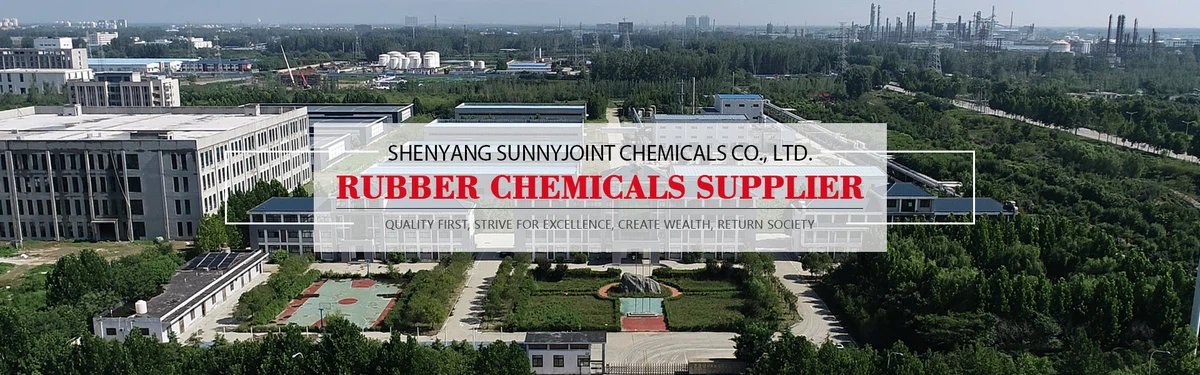
Shenyang Sunnyjoint Chemicals Co., Ltd. is a professional rubber chemicals supplier established in 2003, located in Shenyang, Liaoning province. We devote to rubber chemicals' research, development, production, and sales. The main serials of our products are rubber accelerator, rubber antioxidant, vulcanizing agent, antiscorching agent and so on.
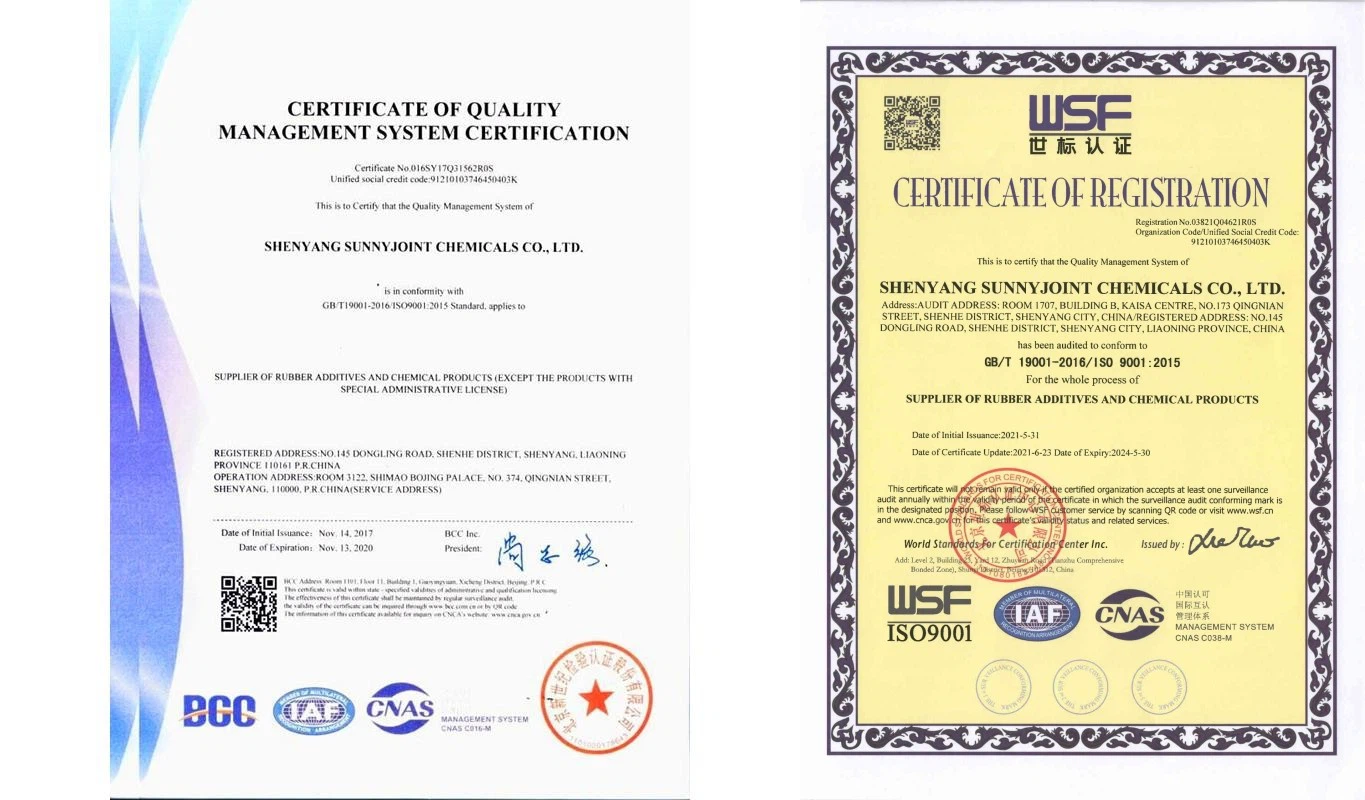
Certifications
FAQ
Q: Are there any alternatives to Vulcanizing Agents?
A: Yes, there are alternative methods to achieve cross-linking in polymers, such as radiation curing or using thermoplastic elastomers. However, Vulcanizing Agents remain the most widely used and effective method for rubber vulcanization.
Q: Can Vulcanizing Agents be used for repairing rubber products?
A: Yes, Vulcanizing Agents can be used for repairing rubber products. By applying the appropriate Vulcanizing Agent and heat, the cross-linking process can be initiated, restoring the strength and integrity of the rubber.
Q: What are the advantages of using Vulcanizing Agents?
A: Using Vulcanizing Agents provides improved mechanical properties, such as increased strength, durability, and resistance to heat, chemicals, and aging. It also allows for the modification of rubber properties to meet specific application requirements.
Q: Can Vulcanizing Agents be used for both natural and synthetic rubber?
A: Yes, Vulcanizing Agents can be used for both natural rubber (derived from latex) and synthetic rubber (manufactured from petroleum-based materials). The selection of Vulcanizing Agent may vary depending on the type of rubber.
Q: How long does the vulcanization process take?
A: The vulcanization process duration depends on various factors, including the type of Vulcanizing Agent, rubber compound formulation, temperature, and pressure. It can range from a few minutes to several hours.
Q: Can Vulcanizing Agents be used for high-temperature applications?
A: Yes, Vulcanizing Agents can enhance the heat resistance of rubber, making it suitable for high-temperature applications. Peroxide-based Vulcanizing Agents are particularly effective in this regard.
Q: Are there any limitations or disadvantages of using Vulcanizing Agents?
A: Some Vulcanizing Agents may have limitations or disadvantages, such as potential toxicity, odor, or discoloration. It is important to consider these factors when selecting a Vulcanizing Agent for a specific application.
Q: Can Vulcanizing Agents be used for food-grade applications?
A: Yes, there are Vulcanizing Agents available that are specifically formulated for food-grade applications. These Vulcanizing Agents comply with relevant regulations and standards to ensure safety.
Q: How can the effectiveness of Vulcanizing Agents be tested?
A: The effectiveness of Vulcanizing Agents can be tested through various methods, including tensile strength testing, hardness testing, aging tests, and analysis of physical properties like elongation and tear resistance.
Q: Can Vulcanizing Agents be used for recycling rubber?
A: Yes, Vulcanizing Agents can be used in the recycling process of rubber. By adding a suitable Vulcanizing Agent, the recycled rubber can be re-vulcanized, restoring its properties for reuse.
Q: How does a Vulcanizing Agent work?
A: Vulcanizing Agents work by forming chemical bonds between polymer chains, creating a three-dimensional network structure. This cross-linking enhances the mechanical properties of the material.
Q: What are the common types of Vulcanizing Agents?
A: Common types of Vulcanizing Agents include sulfur, peroxides, metal oxides (such as zinc oxide), and organic accelerators (like thiurams and thioureas).
Q: What is the role of sulfur as a Vulcanizing Agent?
A: Sulfur is the most widely used Vulcanizing Agent. It forms cross-links between polymer chains through a process called vulcanization, resulting in improved strength, elasticity, and resistance to heat and chemicals.
Q: How are peroxides used as Vulcanizing Agents?
A: Peroxides decompose at elevated temperatures, generating free radicals that initiate cross-linking reactions in polymers. They are commonly used for vulcanizing silicone rubber and other heat-sensitive materials.
Q: What are metal oxides used for in vulcanization?
A: Metal oxides, such as zinc oxide, act as activators or accelerators in the vulcanization process. They enhance the efficiency of sulfur-based Vulcanizing Agents and improve the bonding between rubber and other materials.
Q: What are organic accelerators in vulcanization?
A: Organic accelerators, like thiurams and thioureas, speed up the vulcanization process by reducing the time and temperature required for cross-linking. They are commonly used in combination with sulfur-based Vulcanizing Agents.
Q: Can Vulcanizing Agents be harmful to health?
A: Some Vulcanizing Agents, such as certain organic accelerators, can be harmful if not handled properly. It is important to follow safety guidelines and use appropriate protective equipment when working with these substances.
Q: Are there any environmentally friendly Vulcanizing Agents?
A: Yes, there are environmentally friendly Vulcanizing Agents available. For example, peroxide-based Vulcanizing Agents do not produce harmful byproducts during the vulcanization process.
Q: Can Vulcanizing Agents be used for other materials besides rubber?
A: While Vulcanizing Agents are primarily used for rubber, they can also be used for other materials like plastics and elastomers. The specific Vulcanizing Agent and process may vary depending on the material being treated.
Q: What factors should be considered when selecting a Vulcanizing Agent?
A: When selecting a Vulcanizing Agent, factors such as the type of polymer, desired properties, processing conditions, and environmental considerations should be taken into account.
As a professional China vulcanizing agent manufacturer and suppliers, we supply rubber chemical, rubber additive and prepared rubber products with high quality and best price. Feel free to buy our quality vulcanizing agent.
